How St. George red dust affects office cleaning

Anyone who works in an office here knows the look. A thin rust-colored film shows up on the front glass, a pink line forms along the baseboard, and the window sill someone wiped on Monday has a faint red haze again by Wednesday. St. George red dust is part of doing business in the greater St. George area, and it changes what an office cleaning plan has to cover.
This guide covers where office dust comes from, where it collects inside a typical office, why it behaves differently from ordinary dirt, and how a written cleaning scope keeps it from building up between visits.
Where St. George red dust comes from
The red rock around town gets its color from iron. According to the Utah Geological Survey, the red in Utah’s sandstone comes from hematite, an iron oxide that coats the sand grains, and only a small amount is needed to color the rock. As that rock weathers and the soil dries out, the finest particles break loose and travel.
Several things lift those particles into the air. Spring brings steady wind. Summer storms can push a wall of gusty air ahead of the rain. Dry conditions most of the year keep the topsoil loose, and steady growth across St. George, Washington, Santa Clara, and Little Valley means new grading, road work, and landscaping projects are turning up fresh soil somewhere nearby most of the time.
Once dust gets inside, it has nowhere to go. Offices stay closed up for air conditioning much of the year, so whatever comes through the door stays until someone removes it.
Where red dust builds up in an office
St. George red dust does not spread evenly. It follows air and foot traffic, then settles on flat surfaces and along edges. These are the spots that show office dust first in a typical professional office.
Entry glass and door frames
Wind pushes dust against the door each time it opens. It dries on the glass as a cloudy film and packs into the gap along the frame.
Mats and the first few feet of floor
Shoes carry most of it in. A mat catches the first layer, and whatever the mat misses lands in a fan shape just inside the door.
Sills, ledges, and frames
Window sills sit right where outside air leaks in. Fine dust settles on any flat ledge and shows up quickly on white paint.
Air vents and returns
Return vents pull air from the room and leave dust on the grille. A red-gray fringe on a ceiling vent is one of the clearest signs of buildup.
Hard floor edges and corners
Foot traffic pushes dust toward the walls. A mop that only covers open floor leaves a rust-colored line at the baseboard.
Dark counters and surfaces
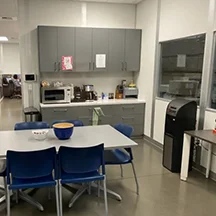
Black breakroom counters, appliance fronts, and dark desks show a dust film within a day or two of a wipe-down.
Why desert dust is harder to clean than ordinary dirt
Three traits make desert dust tougher to manage than the dirt most cleaning routines are built around.
The particles are very fine. Dust this fine drifts up the moment it is disturbed and settles again somewhere else. A feather duster mostly relocates the problem from the shelf to the floor, and from the floor back to the shelf.
Iron oxide is a pigment. Left in place long enough, the dust can tint light grout, pale carpet near the entry, and white baseboards, and the longer it sits, the more work it takes to lift.
Water turns it to mud. Moisture from a rainstorm, sprinkler overspray, or an overloaded mop turns red dust into a thin slurry. That slurry dries into streaks on tile and leaves a reddish edge on grout lines.
The fix for all three is the same: capture the dust and carry it out of the room. Damp microfiber holds fine particles in the cloth, and a vacuum pass before mopping removes loose grit so there is nothing left to turn into mud.
Handling St. George red dust with a written scope
A written scope solves the dust problem through pace. Dust that comes back every day gets attention every visit. Areas where it builds slowly get a weekly pass, and the slowest-building spots get a monthly detail. Here is how that looks across the areas that collect it most.
| Area | Every visit | Weekly | Monthly |
|---|---|---|---|
| Entry and glass | Entry door glass cleaned and mats vacuumed | Interior glass and partitions cleaned | Door frames and entry vents cleared of red dust |
| Floors | Carpet vacuumed, hard floors swept and damp-mopped | Edges and corners vacuumed, carpet spots treated | Baseboards wiped |
| Desks and surfaces | Touchpoints disinfected, clear desk surfaces dusted | Sills, ledges, and frames dusted | High dusting and air vents |
| Breakroom | Counters, sink, tables, and appliance fronts cleaned | Microwave interior cleaned | Cabinet fronts wiped |
From the standard After Hours office scope. Each account’s scope is set in writing after the walkthrough.
The split follows how dust behaves. Entries get it fresh every day, so they are cleaned every visit. Sills and floor edges fill in over several days, so a weekly pass keeps them from ever looking dusty. Vents and baseboards build slowly but are hard to miss once they turn red, which makes a monthly detail the right rhythm. You can see the complete scope, area by area, on our page for janitorial services in St. George.
Cleaning methods that keep office dust from spreading
Frequency handles how often. Method handles how well. The order of work during each visit decides if dust gets removed or just rearranged.
- Work from the top down. High dusting and vents come before desks and counters, and surfaces come before floors, so anything that falls gets picked up on the next pass.
- Dust with damp microfiber. A lightly dampened cloth grabs fine particles and holds them. Dry cloths lift dust into the air, where it settles again later that night.
- Vacuum before mopping. Pulling loose grit off hard floors first keeps the mop from turning it into red streaks.
- Give edges their own pass. Corners, baseboards, and the strip along each wall need a crevice tool or an edge pass, since the main floor pass skips them.
- Finish at the door. The entry glass and mats come last, so the first thing your staff and clients see in the morning is the cleanest part of the office.
What your team can do during the day
Nightly cleaning removes what came in. A few daytime habits cut down on how much comes in to begin with.
- Keep entry doors closed on windy afternoons. A propped door lets dust roll straight across the floor.
- Use a full-length walk-off mat at each entry so shoes get several steps of contact before reaching carpet.
- Ask your property manager how often the HVAC filters are changed. Fresh filters catch fine dust before it reaches the vents.
- Clear window sills of plants and stacked items so they can be wiped down each week.
Seasons and projects that bring in more dust
Some stretches of the year are harder on an office than others. Spring wind, summer storms, and a construction project next door can all bring noticeably more dust to the entry for a few weeks. A standard scope absorbs most of it. When it doesn’t, the options are simple: add an extra visit before a big client meeting or inspection, schedule a quarterly deep clean for the baseboards, vents, and high surfaces, or move from one night a week to two during the worst months. Each of these is listed with the other add-ons in our commercial cleaning cost guide.
How you know the dust got handled
Keeping St. George red dust in check only works if it happens every visit, and commercial cleaning happens after everyone has gone home. That is why every After Hours visit ends with a photo report texted to your contact: the finish time, the checklist count, two or three photos, and the time the alarm was set.
Sample report
Cleaned 11:42 PM
Checklist 18 of 18


Alarm set 11:44 PM
If something was missed, call us, and it gets re-cleaned within 24 hours at no charge. The full process, from walkthrough to first report, is laid out on our how it works page.
Common questions about red dust in the office
How often should an office in St. George be dusted?
Shared touchpoints and clear desk surfaces should be dusted every visit. Sills, ledges, and frames need a weekly pass, and vents and high surfaces need attention once a month. Offices near active construction or a busy road may need a second night a week.
Can red dust stain carpet?
Yes. Fine iron-rich dust can tint light carpet near entries, especially once it is ground in or gets wet. Vacuuming every visit and treating spots each week keeps it from setting.
Does red dust affect air vents?
Return vents collect it on the grille, and a red fringe is a common sight in local offices. Vents get dusted as part of the monthly detail, while filter changes fall under the building’s HVAC maintenance.
Client-facing offices feel red dust first, in the lobby and at the front glass. Our page on office cleaning in St. George covers how those offices are handled.
St. George red dust isn’t going away, and an office can still look clean every morning. Start with the estimate calculator for a monthly range, or request a quote and we’ll set up a 10 to 20 minute walkthrough.